



In the fiercely competitive beauty sector, maintaining product safety is not just a preference; it is a necessity. While a great formula is essential, true quality is determined by what happens during the manufacturing process. This is where Good Manufacturing Practices (GMP) come into play, serving as the universal language for quality assurance. This guide examines the essence of Cosmetic GMP, the significance of ISO 22716, and the strategic value of certification.
Understanding Cosmetic GMP as a Safety Foundation
Good Manufacturing Practices represent a rigorous framework of guidelines designed to ensure that every cosmetic product meets specific quality benchmarks consistently. Unlike simple end-product testing, GMP is a holistic system. It monitors everything from the sourcing of raw materials and the hygiene of the facility to the technical calibration of equipment and the expertise of the workforce.
The primary objective is to manage risks that are invisible to the naked eye. By implementing these standards, manufacturers can prevent issues like cross-contamination, ingredient mix-ups, or labeling errors. Instead of just checking for quality at the end, GMP builds excellence into the product during every minute of production.
ISO 22716: The International Language of Quality
Regional regulations exist globally, such as the evolving MoCRA requirements in the United States. However, ISO 22716 stands as the premier international benchmark for the cosmetics industry. It provides a unified set of guidelines that are recognized across borders, making it easier for brands to scale globally.
This standard covers every operational detail imaginable. It outlines the required sanitary conditions for premises, the precise documentation of packaging operations, and the management of internal audits. For companies looking to export, aligning with ISO 22716 is more than a compliance step; it is a signal to global partners that the brand operates at the highest professional level.
Strategic Benefits of Securing GMP Certification
Obtaining official Cosmetic GMP Certification provides far-reaching advantages that go beyond basic legal compliance. In regions like the European Union, adherence to these standards is a prerequisite for market entry. Without it, a brand simply cannot compete in major global territories.
Beyond the legalities, certification acts as a shield against operational risks. It reduces the likelihood of expensive batch failures or product recalls that can devastate a brand’s reputation. Furthermore, the emphasis on organized, documented processes leads to higher efficiency, less material waste, and better resource management. Finally, it provides total traceability, allowing a manufacturer to track any single bottle back to its original raw material batch.
Essential Operational Elements of a GMP Framework
To function effectively, a GMP system must be built on several non-negotiable pillars of control and documentation:
Documentation and the Principle of Traceability
The golden rule of manufacturing is that if an action was not recorded, it officially never happened. A robust system requires that every procedure, from the initial delivery of ingredients to the final shipment, is logged and approved. This transparency is vital for maintaining accountability and solving issues quickly if they arise.
Maintaining Sanitation and Facility Hygiene
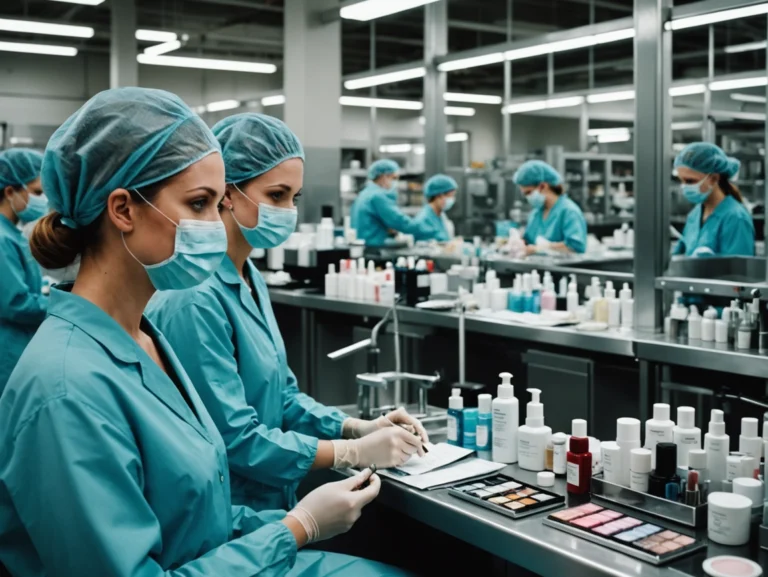
Prevention is the best cure for contamination. GMP requires strict sanitation protocols for both the physical environment and the personnel. Facilities must be designed to be easily cleaned, and staff must follow rigorous hygiene practices to ensure that no microbial or physical contaminants enter the production line.
Validation and Consistency in Process Control
A high-quality product should not be the result of luck. Process control involves setting specific parameters for every production run and validating them regularly. This ensures that the thousandth bottle of a lotion is identical in safety and efficacy to the very first one produced.
Rigorous Complaint Management and Internal Audits
Quality management does not end when the product leaves the warehouse. A professional GMP system includes a clear method for recording and investigating consumer feedback or adverse events. Additionally, regular internal audits ensure the system is not static but is constantly being checked for gaps and improved over time.
By adopting these rigorous controls, cosmetic manufacturers fulfill their most important promise: delivering products that are safe, reliable, and worthy of consumer trust.
Not sure if your facility fully complies with ISO 22716 GMP requirements? Speak with a GMP expert today. Get in touch!
ISO 22716 in practice
The Regulation requires manufacture in accordance with Good Manufacturing Practice and treats compliance with the harmonised standard as the way to demonstrate it. ISO 22716 is that standard, and it is written as a practical guide to production rather than as a quality-management system in the abstract.
It covers the full chain: personnel and training, premises and equipment, raw material and packaging control, production operations, control of finished products, storage and shipment, subcontracting, deviations and complaints, recalls, change control, internal audit and documentation. The unifying idea is traceability — being able to reconstruct exactly what went into a batch, who made it, under what conditions and where it went.
Certification to ISO 22716 is not legally mandatory. Many manufacturers hold it because it is the simplest way to evidence compliance to customers and authorities, but a documented, demonstrably applied GMP system also satisfies the requirement. What is not acceptable is a statement of GMP compliance with no records behind it.
What an audit actually looks at
Whether the audit is an internal review, a customer visit or an authority inspection, the questions converge on the same theme: can you prove what you claim?
Batch documentation is examined first. A manufacturing record should show the formula used, the specific raw material batches and their Certificates of Analysis, equipment and personnel, in-process checks, yields and reconciliation, and the finished product test results. Auditors typically pick a batch on the shelf and trace it backwards to its raw materials, then forwards to the customers who received it.
After that come cleaning and changeover records, since cross-contamination between products is a principal GMP risk; calibration and maintenance evidence for weighing and measuring equipment; water system control where purified water is used; and how deviations and complaints were investigated and closed. Recurring findings tend to be mundane — records completed retrospectively, uncalibrated scales, undocumented formula changes and unvalidated cleaning.
GMP for small and artisanal producers
GMP applies regardless of scale. A producer making soap or balms in a small workshop is subject to the same obligation as a large contract manufacturer, which surprises many new brands. The standard is proportionate in how it is implemented, but not in whether it applies.
At small scale the essentials are achievable without significant investment: a dedicated production area kept separate from domestic activity, calibrated scales, documented cleaning between batches, a written manufacturing record for every batch made, retained samples, and a simple system for logging complaints and deviations. A batch number that ties a finished unit back to its records is the single most valuable control, and it is also the one most often missing.
Where production is outsourced, the obligation does not disappear. The Responsible Person must satisfy themselves that the manufacturer works to GMP, which in practice means holding their certificate or audit report and having a written agreement covering specifications, change notification and record retention. Assuming a contract manufacturer is compliant without evidence leaves a gap in the Product Information File that an inspection will find.
Frequently asked questions
Is ISO 22716 certification mandatory?
No. Compliance with GMP is mandatory; certification is one way of demonstrating it. A documented and consistently applied system supported by records also satisfies the requirement, though certification is often easier to evidence to customers.
Does GMP apply if I make products at home?
Yes. The obligation is tied to manufacturing cosmetics, not to the size of the operation. A dedicated, controlled production area separated from domestic activity, with proper batch records, is the minimum expectation.
Who is responsible if my contract manufacturer fails GMP?
The Responsible Person named on the label remains accountable for the product. Outsourcing production does not transfer the obligation, which is why holding evidence of your manufacturer’s GMP status matters.
How long do batch records need to be kept?
Align retention with the Product Information File, which must remain accessible for ten years after the last batch was placed on the market. Records that support the file should be kept at least as long.