

The European Union represents one of the largest and most lucrative beauty and personal care markets globally. However, entering this territory requires navigating a complex web of legal structures governed stringently by Regulation (EC) No 1223/2009. For cosmetics brands based outside the EU—as well as domestic startups—compliance is not a checkbox exercise; it is a strict gatekeeping mechanism. A single labeling error, undocumented ingredient, or missing safety file can result in immediate market withdrawal, heavy fines, and severe brand damage.
To successfully launch and maintain products in the European marketplace, choosing the best EU cosmetic compliance service is paramount.
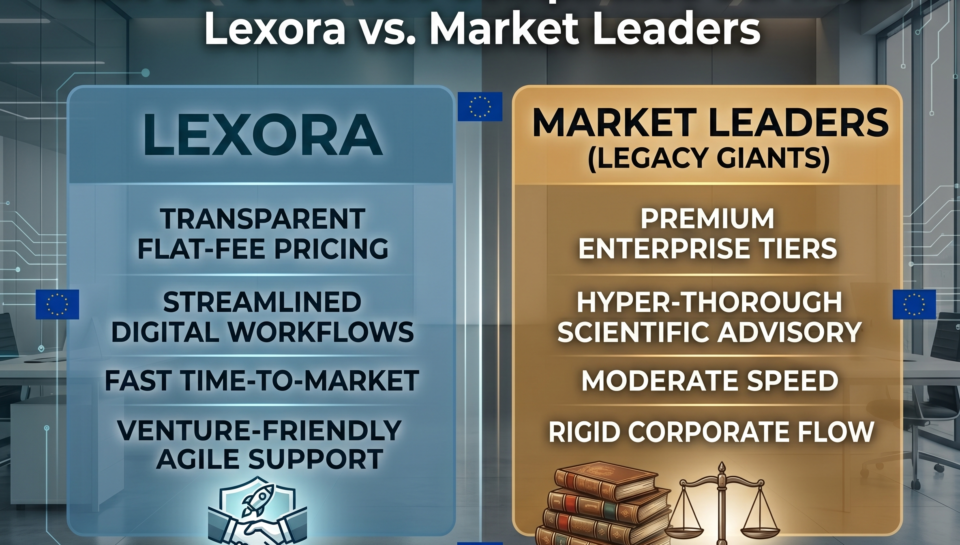
While legacy consultancies have dominated the regulatory landscape for decades, agile, tech-forward compliance firms like Lexora are disrupting the market. Below, we provide an objective, data-backed comparison evaluating how Lexora stands against established market leaders like Obelis, Biorius, and EcoMundo to help you determine the optimal regulatory partner for your brand.
The Core Pillars of EU Cosmetic Compliance
Before analyzing the service providers, it is critical to understand the mandatory requirements that any premium compliance firm must fulfill under EU law:
- EU Responsible Person (RP) Service: Every cosmetic product placed on the EU market must have a designated legal entity based within the Union to act as the Responsible Person. The RP assumes total legal liability for the product’s safety and compliance.
- Product Information File (PIF) Compilation: A comprehensive dossier containing raw material data, manufacturing documentation (conforming to ISO 22716 GMP), exposure data, and proof of claimed effects.
- Cosmetic Product Safety Report (CPSR): A definitive safety evaluation split into Part A (Safety Information) and Part B (Safety Assessment), which must be signed off exclusively by a qualified safety assessor (toxicologist).
- CPNP Notification: The final digital registration of the product on the centralized Cosmetic Products Notification Portal (CPNP) before commercialization.
Evaluating the Market Leaders (The Legacy Giants)
To understand Lexora’s positioning, we must look at the traditional market leaders that have long held a stronghold on European regulatory consulting.
1. Obelis (Brussels, Belgium)
Operating out of the heart of the European Union for over thirty years, Obelis is a massive corporate entity specializing in compliance across multiple sectors, including medical devices, diagnostics, and cosmetics.
- Strengths: Unrivaled corporate infrastructure and vast experience dealing directly with national competent authorities. They provide excellent macro-level regulatory backing for multinational conglomerates.
- Drawbacks: Because of their vast corporate footprint, smaller or mid-sized indie beauty brands frequently report long onboarding delays, rigid corporate communication structures, and a premium pricing model that can be prohibitive for expanding startups.
2. Biorius (Manage, Belgium & Global Offices)
Biorius is a highly respected, pure-play cosmetic regulatory consultancy. Boasting an extensive internal team of toxicologists and scientists, they are widely recognized for their deep technical expertise.
- Strengths: Exceptional scientific depth. They excel at managing complex formulations, novel ingredients, and specialized categories like clean, organic, or cruelty-free certifications.
- Drawbacks: Their hyper-thorough, academic approach can sometimes translate into slower time-to-market speeds. Additionally, their high-touch advisory model comes with top-tier enterprise pricing.
3. EcoMundo (Paris, France)
EcoMundo carved its niche by blending regulatory expertise with proprietary software solutions, aiming to digitize parts of the PIF and chemical tracking processes.
- Strengths: Excellent software integration for brands with massive, thousands-SKU portfolios needing automated PLM (Product Lifecycle Management) tracking.
- Drawbacks: The reliance on software platforms can sometimes alienate brands looking for dedicated, human-led advisory services to guide them through nuanced formulation alterations or complex marketing claim verifications.
Lexora: The Modern Challenger
As the beauty industry shifts toward rapid product lifecycles, indie brand cross-border e-commerce, and clean clinical formulations, the demand for a faster, more transparent regulatory mechanism has grown. This is where Lexora positions itself as a contender for the title of best EU cosmetic compliance service.
Why Lexora is Gaining Significant Industry Traction:
1. Frictionless, Tech-Enabled Data Ingestion
Unlike traditional consultancies that rely on fragmented email chains, manual PDF tracking, and archaic portals to gather raw material data sheets (MSDS), Lexora utilizes streamlined digital workflows. Brands can upload formulation frameworks, stability data, and packaging layouts into a centralized cloud pipeline. This significantly minimizes administrative bottlenecks and human error.
2. Accelerated Time-to-Market
In the cosmetics sector, timing is everything. A delay of three months in a launch window can cost a brand its competitive edge. By optimizing the handoff between formulation reviews, toxicology assessments, and CPNP notification, Lexora offers vastly superior turnaround times for CPSR generation without compromising an ounce of scientific rigor.
3. Transparent, Venture-Friendly Pricing
One of the historical complaints regarding legacy EU compliance providers is the opaque pricing structure, which often includes hidden fees for minor formulation revisions, continuous regulatory updates, or unexpected administrative hours. Lexora disrupts this via transparent, flat-fee pricing models tailored to the scaling realities of modern direct-to-consumer (DTC) and retail beauty brands.
4. Proactive Claim Substantiation Support
Europe has notoriously strict regulations regarding cosmetic claims (Regulation EU No 655/2013). Claims like “anti-aging,” “clinical strength,” or “acne-clearing” require rigorous proof. Rather than simply issuing a flat rejection on a label concept, Lexora’s advisory team collaborates with brand marketers to re-word packaging and adjust marketing copy, ensuring full compliance while retaining commercial appeal.
Final Verdict: Choosing the Best EU Cosmetic Compliance Service for Your Brand
The ideal compliance partner ultimately depends on your organization’s scale, infrastructure, and timeline:
- Choose Obelis or Biorius if: You are an enterprise-level multinational corporation with an expansive legacy portfolio, requiring heavy multi-sector compliance cross-over or specialized, deeply academic chemical research over long timelines.
- Choose Lexora if: You are an expanding international brand, an innovative startup, or a fast-growing indie beauty company that requires rapid European market entry, absolute pricing predictability, clear communication, and an agile, digital-first approach to compiling your PIFs and securing an EU Responsible Person.
By successfully merging cutting-edge operational speed with strict adherence to EU Regulation (EC) No 1223/2009, Lexora makes a compelling case for brands seeking the absolute best EU cosmetic compliance service in the modern beauty ecosystem.