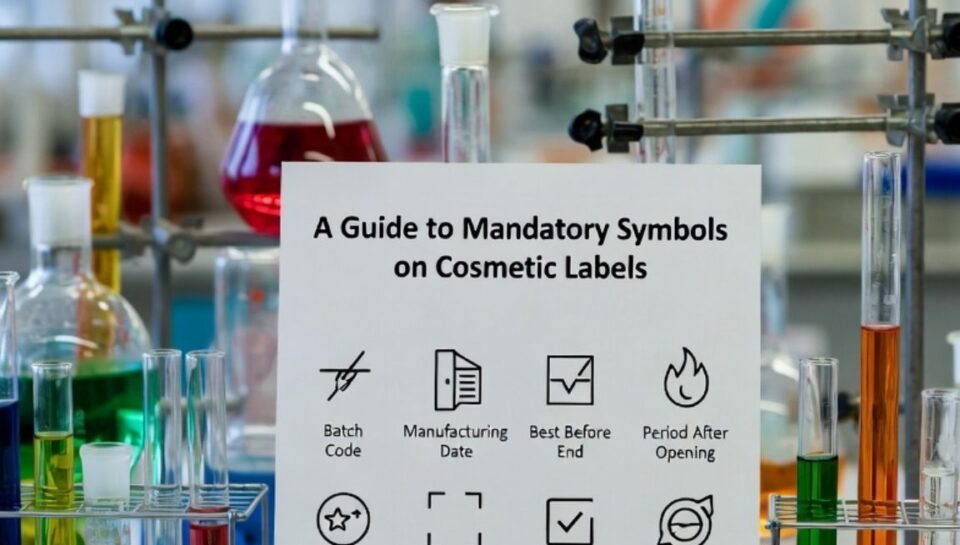
Cosmetic symbols are mandatory graphical elements on product labels that communicate essential safety, shelf life, and environmental information to consumers. These symbols function independently of language, allowing consumers across different markets to understand how to use and dispose of cosmetic products correctly. Regulators require these standardized icons to ensure compliance with international rules, particularly the EU Cosmetics Regulation.
Understanding cosmetic symbols is essential for both consumer safety and regulatory compliance. Incorrect or missing symbols may result in non-compliance and market restrictions.
Safety and Shelf Life Symbols
Safety and shelf life symbols provide consumers with critical information about how long a cosmetic product remains safe to use and under what conditions.
The Period After Opening (PAO) symbol is one of the most important label elements. It appears as an open jar icon and includes a number followed by the letter “M,” such as 12M. This number indicates how many months the product can be safely used after it has been opened for the first time.
The Date of Minimum Durability applies to cosmetic products with a shelf life of less than 30 months. This information appears either as an hourglass symbol or the wording “Best used before the end of,” followed by the month and year. Products with a shelf life longer than 30 months do not require this date and instead rely on the PAO symbol to inform consumers.
Information and Warning Symbols
Information and warning symbols guide consumers to additional details that cannot fit on the main product label.
The “Refer to Enclosed Information” symbol, commonly known as the hand-in-book symbol, indicates that important information appears elsewhere. This may include warnings, specific conditions of use, or the full ingredient list. Manufacturers must use this symbol when such information is provided on a leaflet, hangtag, or insert included with the product.
Packaging and Environmental Symbols
Packaging and environmental symbols relate to the composition, recyclability, and disposal of cosmetic packaging.
The Mobius Loop, also known as the recycling symbol, consists of three arrows forming a triangle. This symbol indicates that the packaging material is recyclable. In many cases, the symbol includes a number or abbreviation, such as PET or HDPE, to identify the type of plastic used.
The Triman logo is a mandatory national labeling requirement in France. It indicates that the product falls under Extended Producer Responsibility rules and must be sorted according to local recycling instructions. The Triman symbol usually appears alongside specific sorting guidance, known as Info-Tri, which explains how to dispose of each packaging component.
The nominal quantity of the product, such as 100 ml or 50 g, often appears next to the “e” symbol. This symbol confirms that the actual content complies with EU metrology requirements and meets the declared quantity standards.
The Role of Cosmetic Symbols in Regulatory Compliance
By standardizing cosmetic symbols, regulators ensure that consumers receive clear and consistent information across markets. These symbols help consumers use products safely, understand shelf life limitations, and dispose of packaging responsibly.
From a regulatory perspective, correct use of cosmetic symbols supports compliance with EU labeling requirements and helps maintain consumer trust. Missing, incorrect, or misleading symbols may lead to enforcement actions, including product withdrawal from the market.
Ensure your cosmetic labels meet all EU regulatory requirements. Contact us!


