


The cosmetic vs medicinal product distinction is one of the first questions any beauty, personal-care or wellness founder must answer before placing a product on the EU market — and getting it wrong can quietly invalidate your entire compliance file. The trouble is that the same jar of cream, the same bottle of spray, can fall into completely different legal regimes depending on what it does, what you claim it does, and how you present it. A product is not “a cosmetic” simply because it looks like one; classification is a legal assessment, not a marketing decision.
This guide explains how the three main regimes — cosmetics, medicinal products and biocides — are defined under EU law, how regulators actually decide where a product sits, and how to read the notorious “borderline” cases that trip up so many new brands.
Key takeaways
- Classification is determined by a product’s presentation, function, claims and primary intended purpose — not by its category name or appearance.
- Cosmetics are defined by Article 2 of Regulation (EC) No 1223/2009; medicinal products by Directive 2001/83/EC (by presentation and by function); biocides by Regulation (EU) No 528/2012.
- A single claim (“treats”, “cures”, “kills 99.9% of bacteria”) can pull a product out of the cosmetic regime into a far stricter one.
- “Borderline” products — anti-dandruff shampoos, hand sanitisers, anti-acne creams, insect-repellent lotions — are decided case by case on their dominant purpose.
- Misclassification means the wrong safety file, the wrong authorisation and potential market withdrawal, so resolve it before formulation and labelling are locked.
- If a product is genuinely dual-purpose, the stricter regime usually wins.
The three legal definitions you need to know
Each regime has its own founding definition. The first step in any classification exercise is to test your product against all three, in order.
Cosmetic products — Regulation (EC) No 1223/2009
Article 2(1)(a) of the EU Cosmetic Regulation defines a cosmetic as “any substance or mixture intended to be placed in contact with the external parts of the human body (epidermis, hair system, nails, lips and external genital organs) or with the teeth and the mucous membranes of the oral cavity with a view exclusively or mainly to cleaning them, perfuming them, changing their appearance, protecting them, keeping them in good condition or correcting body odours.”
Two words do the heavy lifting: exclusively or mainly, and the closed list of permitted functions. If the dominant purpose of your product is anything outside that list — treating a disease, killing pests, restoring a physiological function — it is probably not a cosmetic. For a deeper look at the definition, see our explainer on what qualifies as a cosmetic product under EU law and the broader overview of what EU Cosmetic Regulation 1223/2009 covers.
Medicinal products — Directive 2001/83/EC
A medicinal product is defined two ways, and meeting either limb is enough. First, by presentation: any substance presented as having properties for treating or preventing disease in human beings. Second, by function: any substance that may be used in, or administered to, human beings either to restore, correct or modify physiological functions by exerting a pharmacological, immunological or metabolic action, or to make a medical diagnosis.
The “by presentation” limb is what catches many cosmetic brands off guard. You do not need an active pharmaceutical ingredient to be classed as a medicine — claiming to cure, heal or treat a medical condition can be sufficient on its own.
Biocidal products — Regulation (EU) No 528/2012
The Biocidal Products Regulation (BPR) governs products whose function is to destroy, deter, render harmless, prevent the action of, or otherwise control harmful organisms (bacteria, fungi, viruses, insects) by chemical or biological means. Hand sanitisers, surface disinfectants and many insect repellents fall here. Biocides require authorised active substances and product authorisation — a fundamentally different and heavier route than cosmetic compliance.
How regulators actually decide
National competent authorities and the Commission’s borderline guidance apply a consistent logic. No single factor is decisive on its own; the assessment is holistic.
- Primary intended purpose. What is the product mainly for? A shampoo that cleans hair is cosmetic; a shampoo whose main selling point is treating a scalp disease leans medicinal.
- Function and mode of action. Does it work by a pharmacological, immunological or metabolic mechanism, or by killing organisms? Those mechanisms point away from cosmetics.
- Presentation and claims. Wording, imagery, packaging and even where the product is sold all signal intended purpose. This is where most brands lose control of their classification.
- Composition. The presence of a pharmacologically active or biocidal substance, and at what concentration, weighs heavily.
The same active ingredient can be lawful in more than one regime at different concentrations or with different claims. Zinc pyrithione, for example, appears in cosmetic anti-dandruff shampoos under the cosmetic Annexes — but the claims you make around it determine whether the product stays cosmetic. Substantiating those claims correctly is essential; see our guide on what cosmetic claims are allowed in the EU.
The classic borderline cases
Most disputes cluster around a handful of familiar products. The pattern is always the same: a cosmetic base plus a claim or function that tips it over an edge.
| Product example | Likely category | What triggers the classification |
|---|---|---|
| Anti-dandruff shampoo (cosmetic actives, cosmetic claims) | Cosmetic | Keeps scalp in good condition; cleaning function dominates |
| Anti-dandruff shampoo claiming to “treat seborrhoeic dermatitis” | Medicinal (by presentation) | Disease-treatment claim and therapeutic purpose |
| Deodorant (masks or reduces body odour) | Cosmetic | “Correcting body odours” is an explicit cosmetic function |
| Antiperspirant (blocks sweat physiologically) | Usually cosmetic; borderline | Reducing perspiration can edge toward modifying a physiological function |
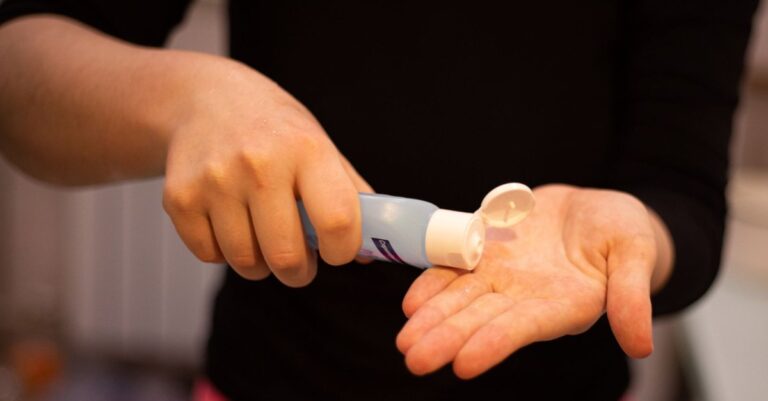
| Hand sanitiser claiming to kill bacteria/viruses | Biocide | Primary purpose is controlling harmful organisms |
| Hand cream that cleanses and moisturises only | Cosmetic | Cleaning and keeping skin in good condition |
| Anti-acne cream claiming to “treat acne” | Medicinal | Treatment of a recognised skin disease |
| Whitening toothpaste (removes surface stains) | Cosmetic | Cleaning teeth; changing appearance |
| Insect-repellent lotion | Biocide | Deterring/controlling harmful organisms (product-type 19) |
| Eyelash serum claiming to grow lashes via a drug-like active | Medicinal (potentially) | Pharmacological action on hair follicles |
The eyelash serum case is especially instructive: a serum that conditions and protects lashes is cosmetic, but one relying on a prostaglandin-analogue to physiologically stimulate growth crosses into medicinal territory. The deodorant-versus-antiperspirant split shows how two near-identical products diverge purely on mechanism and claim.
Why misclassification is dangerous
Putting a medicinal or biocidal product on the market dressed as a cosmetic is not a paperwork technicality — it is an unlawful placing on the market. The consequences compound quickly.
- The wrong safety file. A cosmetic needs a Cosmetic Product Safety Report; a medicine needs a marketing authorisation; a biocide needs product authorisation under the BPR. The files are not interchangeable.
- Enforcement and withdrawal. Authorities can order removal from sale, recall stock, and refer serious cases for penalties — after you have already spent on production and launch.
- Reputational and commercial damage. Retailers and marketplaces routinely delist products whose classification is challenged.
A frequent and costly error is building a full cosmetic compliance file — including a Cosmetic Product Safety Report (CPSR) — and only then discovering the product’s claims make it a medicine or biocide. At that point the safety file is the wrong document for the wrong regime, and the launch has to stop. Settle classification before you commission safety assessment, packaging artwork or marketing copy.
What to do if you are unsure
If your product sits near a border, treat the ambiguity as a project risk to be closed early, not a question to defer until launch.
- Write down the primary purpose in one plain sentence, then test it against all three definitions.
- Audit every claim — on pack, on the website, in ads and in influencer briefs. Strip anything therapeutic, disease-related or “kills germs” unless you intend to enter that regime deliberately.
- Check the actives against the cosmetic Annexes and the lists of approved biocidal and pharmacological substances.
- Document your reasoning so you can defend the classification if challenged.
- If the dual-purpose nature is genuine, assume the stricter regime applies and plan accordingly.
Bringing it all together
Classification is the foundation that every other compliance step rests on — get it right and the rest of the file follows logically; get it wrong and the file is built on sand. The decisive factors are always the same: presentation, function, claims and primary intended purpose. If your product is clearly cosmetic, the next step is a robust safety dossier, and our Cosmetic Product Safety Report (CPSR) service takes you through assessment and documentation with the classification already nailed down. For brands wanting classification, claims review and the full dossier handled end to end, the full compliance pack brings every piece together. If you are unsure which regime your product belongs to, it is far cheaper to ask before formulation than to unwind a launch afterwards.
Frequently asked questions
How do I know if my product is a cosmetic or a medicine?
Test it against Article 2 of Regulation (EC) No 1223/2009 and against both limbs of Directive 2001/83/EC. If its dominant purpose is cleaning, perfuming, protecting or improving the appearance of the body, it is likely cosmetic. If it claims to treat or prevent disease (presentation), or works by a pharmacological, immunological or metabolic action (function), it is likely a medicine.
Can the same product be both a cosmetic and a biocide?
A product can only sit in one regime for a given purpose. If its primary function is controlling harmful organisms — as with a hand sanitiser marketed to kill bacteria and viruses — it is regulated as a biocide under Regulation (EU) No 528/2012, even if it also moisturises. Where purposes genuinely overlap, the stricter regime generally prevails.
Why does a single marketing claim change my product’s legal category?
Because a medicinal product can be defined “by presentation” alone — claiming to cure, heal or treat a disease can make a product a medicine regardless of its ingredients. Wording, imagery and packaging are read as evidence of intended purpose, so a therapeutic claim can pull an otherwise cosmetic product into the medicinal regime.
Is an anti-dandruff shampoo a cosmetic or a medicine?
It depends on the actives and the claims. A shampoo that cleans hair and keeps the scalp in good condition using cosmetic-approved actives is a cosmetic. One that claims to treat a diagnosed scalp disease such as seborrhoeic dermatitis, or that relies on a pharmacologically active substance, is treated as a medicinal product.
What happens if I classify my product incorrectly?
You will have prepared the wrong compliance file — for example a cosmetic safety report for what is legally a medicine — which means the product is placed on the market unlawfully. Authorities can order withdrawal or recall, retailers may delist it, and you may face penalties. Resolving classification before safety assessment and labelling avoids this.
Are insect-repellent lotions cosmetics?
Generally no. A lotion whose purpose is to repel or control insects falls under the Biocidal Products Regulation (EU) No 528/2012 as a repellent (product-type 19), because its function is deterring harmful organisms. A skincare lotion that merely moisturises, with no repellent claim, remains a cosmetic.