


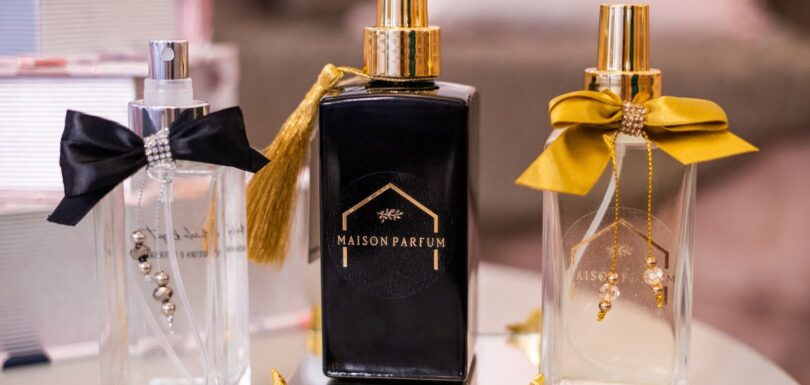
A perfume looks simple — a beautiful juice in a glass bottle — but it is one of the most demanding cosmetics to sign off. A high concentration of fragrance materials, a flammable alcohol base and a long list of declarable allergens all converge in a single product. When you commission a CPSR for perfume, eau de toilette or eau de parfum, the safety assessment has to reconcile every one of those at once, and it leans heavily on documents only your fragrance house can supply.
This guide explains what makes fragrance products harder to assess than the average cream, which inputs your safety assessor genuinely needs, and exactly what your brand must obtain from its fragrance supplier.
Key takeaways
- A perfume CPSR hinges on fragrance-house paperwork: the IFRA Conformity Certificate, a full allergen declaration and the compound’s Safety Data Sheet.
- Regulation (EU) 2023/1545 expands the fragrance allergens named on the label to around 80, with deadlines of 31 July 2026 (new products) and 31 July 2028 (sell-through).
- The alcohol base makes perfume a flammable liquid — a CLP and dangerous-goods overlap, even though the finished retail bottle is exempt from CLP labelling.
- Citrus and some expressed essential oils are phototoxic, so furocoumarin content must be controlled in leave-on fragrances.
- “Natural” does not mean exempt: essential oils carry the same regulated allergens plus restricted constituents such as oakmoss atranol.
- Skin sensitisation, not just systemic toxicity, drives the final safety conclusion for fragrance.
Why perfume is one of the trickier products to assess
Every cosmetic sold in the EU needs a Cosmetic Product Safety Report (CPSR) under Article 10 of Regulation (EC) No 1223/2009, structured as the Part A safety information and Part B assessor’s conclusion in Annex I. What sets a fine fragrance apart is the sheer weight of fragrance material it carries. As a rough hierarchy, an extrait or parfum runs at 15–30% fragrance compound, an eau de parfum around 10–20%, an eau de toilette roughly 5–15% and an eau de cologne lower still — the balance being mostly cosmetic-grade ethanol and a little water.
That concentration matters because a perfume is a leave-on product applied to the neck, wrists and décolletage — skin often exposed to sunlight. The higher the fragrance load, the more of every allergen, restricted substance and potential sensitiser reaches the consumer, and the lower the label declaration threshold (0.001% for leave-on products). If the safety report itself is new to you, our CPSR explained guide covers the Part A/Part B structure.
IFRA Standards and the documents your fragrance house must supply
The most important input for a perfume assessment is the paperwork behind the fragrance compound. Fragrance materials are governed globally by the IFRA Standards — the International Fragrance Association’s restrictions and prohibitions, built on toxicological data from the Research Institute for Fragrance Materials (RIFM). IFRA sets maximum use levels by product category; fine fragrance and other hydroalcoholic products applied to the skin fall under IFRA Category 4. These Standards are industry self-regulation rather than EU law, but a competent assessor treats them as the reference for whether a fragrance is used safely.
Your fragrance house should therefore provide, as a minimum:
- an IFRA Conformity Certificate confirming the compound meets the current IFRA Standards at your intended use level in the relevant category (Category 4 for fine fragrance);
- a full allergen declaration — a statement listing each regulated fragrance allergen and its concentration within the compound, so the allergen content of the finished perfume can be calculated;
- a Safety Data Sheet for the fragrance compound, covering physical hazards and handling;
- confirmation on restricted or prohibited constituents (for example furocoumarin content, or oakmoss/treemoss levels) checked against Annexes II and III.
Our overview of the regulatory requirements for fragrance and aroma explains how these compound-level documents feed into the finished-product file.
Note: An IFRA certificate is issued for a specific concentration in a specific product type. If you dose the same compound higher, or move it from an eau de toilette into a more concentrated eau de parfum, the certificate may no longer cover your use — ask the fragrance house to reissue it for the actual formula.
Fragrance allergen declaration under Regulation (EU) 2023/1545
For years, EU law required 26 named fragrance allergens to be listed in the ingredients when present above 0.001% in leave-on products or 0.01% in rinse-off products. Regulation (EU) 2023/1545 amended Annex III and expanded that list to around 80 individually named substances, including familiar essential-oil constituents such as limonene, linalool, citral, geraniol and eugenol.
For a fragrance-forward product this is a substantial change: a perfume can easily trigger a dozen or more of these declarations, each appearing in the ingredient list under its INCI name. Because perfume is leave-on, the low 0.001% threshold applies, so allergens present at very small percentages still make the label. The transition runs on two dates — 31 July 2026, after which products placed on the market must comply, and 31 July 2028, after which non-compliant stock can no longer be made available. Our deep dive on the new fragrance allergen labelling for 2026 and the broader guide to EU cosmetic allergen labelling walk through the full list.
Warning: The 31 July 2026 deadline is not far off, and reworking a fragrance ingredient list touches artwork, translations and often the fragrance formula itself. If your allergen declaration is based on the old 26-allergen list, treat it as out of date and re-request an updated allergen statement from your fragrance house now — a label review is the quickest way to catch a non-compliant list before print.
The alcohol base: flammability and the CLP overlap
Most fine fragrances are built on 70–90% ethanol, which makes the finished juice a flammable liquid. This is where perfume brushes up against a second regime — the CLP Regulation (EC) No 1272/2008 on classification, labelling and packaging. A cosmetic in the finished form supplied to the consumer is exempt from CLP’s classification and labelling rules (Article 1(5) of CLP), so you will not put a flame pictogram on the retail bottle. But the flammability does not simply disappear.
In practice the alcohol base surfaces in three ways: the physical-hazard profile your assessor documents in Part A; dangerous-goods transport, where perfumes ship as UN 1266 (flammable perfumery products) under ADR/IATA rules; and warehouse storage and workplace safety. Where the same fragrance is handled outside the finished-cosmetic exemption — a bulk concentrate, or a fragrance oil sold on its own — CLP classification can apply in full, and a Poison Centre Notification with a UFI under CLP Annex VIII may then be required. Our explainer on the CLP Regulation sets out where these obligations begin and end.
Phototoxicity, naturals and the margin of safety
Two further issues are specific to fragrance chemistry. The first is phototoxicity. Certain citrus and expressed essential oils — bergamot, cold-pressed lime, bitter orange, angelica root — contain furocoumarins (such as bergapten) that react with UV light and can cause a burn-like reaction on sun-exposed skin. IFRA restricts total furocoumarins in leave-on products, and many brands switch to furocoumarin-free (FCF) grades of citrus oil. Because perfume goes on skin that sees the sun, the assessor specifically checks the furocoumarin content of any expressed citrus oils in the formula.
The second is the myth that natural equals safe. Essential oils and absolutes are complex mixtures carrying the very allergens Regulation (EU) 2023/1545 targets, and some contain restricted constituents — oakmoss and treemoss extracts (atranol and chloroatranol), or materials such as methyl eugenol — capped or prohibited under Annexes II and III. A “100% natural” fragrance is not exempt from any of this and often needs closer scrutiny, not less.
Finally, fragrance safety turns on sensitisation as much as systemic toxicity. Alongside the classic Margin of Safety (the ratio of a no-effect dose to estimated exposure, conventionally at least 100), the assessor evaluates dermal sensitisation using the quantitative risk approach behind the IFRA Standards, keeping exposure below the level expected to induce an allergy. That combined picture supports the Part B conclusion for a perfume.
Perfume-specific safety data points your assessor will check
The table below summarises the fragrance-specific questions a safety assessor works through — and the document or rule each one draws on.
| Hazard / consideration | What’s assessed | Relevant rule / standard |
|---|---|---|
| High fragrance load | Concentration of the fragrance compound in the finished product, checked against the maximum use level for the product category | IFRA Standards / IFRA Conformity Certificate (Category 4) |
| Fragrance allergens | Identity and percentage of each regulated allergen, and whether it exceeds the 0.001% leave-on declaration threshold | Regulation (EU) 2023/1545 amending Annex III of 1223/2009 |
| Flammable alcohol base | Ethanol content and physical-hazard/flammability profile; transport classification | CLP Regulation (EC) No 1272/2008; transport UN 1266 |
| Phototoxicity | Furocoumarin content of expressed citrus and other phototoxic oils in a leave-on use | IFRA Standard on furocoumarins; Annex III restrictions |
| Restricted natural constituents | Oakmoss/treemoss (atranol, chloroatranol), methyl eugenol and similar capped or banned materials | Annexes II and III of Regulation (EC) No 1223/2009 |
| Sensitisation & systemic safety | Dermal sensitisation risk (quantitative approach) plus Margin of Safety for systemic exposure | Article 10 and Annex I, Part B of 1223/2009 |
Gather these before you commission the report: the IFRA Conformity Certificate, the updated allergen declaration, the compound Safety Data Sheet, your full quantitative formula (all ingredients at exact percentages), and any furocoumarin or phototoxicity statement for citrus oils. Our step-by-step guide on how to get a CPSR for your cosmetic product covers the wider document set around these fragrance-specific inputs.
Bringing it all together
A perfume CPSR is not different in law from any other safety report — it is the same Article 10 assessment against Annex I — but it stacks several tricky considerations into one product: an intense fragrance load, an expanded allergen list under Regulation (EU) 2023/1545, a flammable base with a CLP shadow, and phototoxic naturals. Get the fragrance-house documents right at the outset and the rest of the file falls into place.
If you are preparing a fine fragrance, eau de toilette or eau de parfum for the EU market, Lexora’s CPSR service handles the assessment end to end — reconciling your IFRA certificate, allergen statement and quantitative formula into a compliant report, and flagging any allergen-labelling or flammability issues before they reach the shelf.
Frequently asked questions
Do I need a separate CPSR for perfume compared with other cosmetics?
No — a perfume needs the same CPSR required of any cosmetic under Article 10 of Regulation (EC) No 1223/2009, but the assessment is more involved. The high fragrance concentration, alcohol base and long allergen list mean your assessor needs extra fragrance-house documents, chiefly the IFRA Conformity Certificate and a full allergen declaration.
What do I need to get from my fragrance supplier for the CPSR?
At a minimum, request the IFRA Conformity Certificate for your product category and use level, an up-to-date allergen declaration listing each regulated allergen and its percentage in the compound, and the fragrance Safety Data Sheet. Ask for confirmation of any restricted constituents too, such as furocoumarin content in citrus oils or oakmoss levels, so they can be checked against Annexes II and III.
How does Regulation (EU) 2023/1545 change perfume labelling?
It expands the fragrance allergens that must be named individually in the ingredient list from 26 to around 80, so most perfumes now carry more allergen declarations. New products must comply by 31 July 2026, and existing stock can be sold through until 31 July 2028. See our guide to the 2026 fragrance allergen labelling changes for the full list.
Is an alcohol-based perfume classified as flammable under CLP?
The juice itself is a flammable liquid because of its high ethanol content, but a finished cosmetic supplied to the consumer is exempt from CLP classification and labelling under Article 1(5) of the CLP Regulation, so no flame pictogram appears on the retail bottle. The flammability still matters for transport (perfumes ship as UN 1266), storage and the safety report’s physical-hazard profile.
Why is phototoxicity a concern for perfume specifically?
Perfume is a leave-on product applied to skin that is frequently exposed to sunlight, and certain expressed citrus oils contain furocoumarins that react with UV light to cause burn-like reactions. Your assessor checks the furocoumarin content of any such oils against the IFRA restriction for leave-on products; many brands use furocoumarin-free citrus grades to remove the risk entirely.