


A lip balm safety assessment starts from a fact most brands find surprising: lip products are assessed as something the consumer eats. Not deliberately, but a measurable proportion of everything applied to the lips is ingested, and EU exposure models have been built on that assumption for decades. It changes the colorant rules, the heavy metal limits and the acceptable concentration of almost every ingredient.
The compensation is that a wax-and-oil balm or an anhydrous lip oil normally needs no challenge test and no microbiological testing at all. This guide covers what a qualified assessor examines in lip care, why the ingestion route tightens things so much, and where lip balms and tinted lip oils most often fail.
Key takeaways
- Lip products are assessed against an oral exposure route for part of the applied amount, not purely a dermal one.
- Colorants must be permitted for lip application under Annex IV, which is a narrower list than for skin.
- Heavy metal traces in pigments are assessed as technically unavoidable impurities against limits that assume swallowing.
- An anhydrous balm or lip oil normally needs no challenge test and no microbiological testing, with the rationale documented.
- Oxidation is the real stability question: plant oils go rancid and the antioxidant system has to justify the shelf life.
- An SPF claim brings Annex VI UV filters and substantiated SPF testing into scope.
- Flavours and sweeteners are assessed on the ingestion route and need their own documentation.
- Wand and pot applicators return to the lips repeatedly, and the file should address that.
Why the ingestion route changes everything
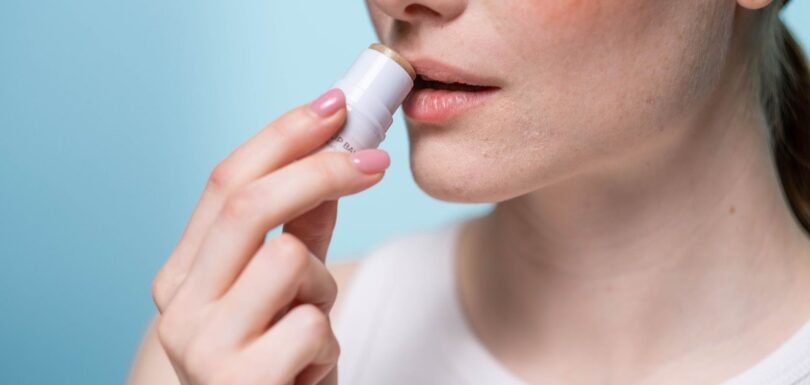
Established exposure models used across the EU assume that a proportion of any lip product is ingested during normal use, through licking, eating and drinking. That assumption is what makes lip colorant rules stricter than skin colorant rules, and it is why the lipstick category has always carried its own heavy metal scrutiny.
In practice the assessor runs two calculations rather than one. A dermal calculation for the lip vermilion and surrounding skin, and an oral calculation for the ingested proportion. The margin of safety has to hold for both, and the oral route is usually the binding one. Our guide to how the margin of safety is calculated walks through the arithmetic.
Reapplication frequency then multiplies it. A lip balm used in cold weather may be reapplied ten or more times a day, and a tinted lip oil is reapplied through the day by design. Frequency is an input to the daily exposure figure, so a product intended for constant reapplication carries a higher figure than a lipstick applied twice.
Colorants: the narrower list
Annex IV of Regulation (EC) No 1223/2009 lists the colorants permitted in cosmetics, with conditions. Two of those conditions matter enormously here: whether the colorant may be used in products applied to the lips, and the purity criteria attached to it.
A tinted lip oil or a coloured balm has to clear the lip column for every pigment in the formula, including everything declared under May Contain (+/-) across a range. This is the same check a full lipstick range needs, and it is where tinted lip care most often trips: the brand assesses the base, assumes the pigments are fine because they are used elsewhere in the catalogue, and does not check the lip condition on each one.
Our guide to heavy metal testing and CPSR requirements for lipsticks and glosses covers the colour side in depth, and INCI list preparation covers how the May Contain declaration should actually be written.
Mineral pigments carry trace heavy metals as an unavoidable consequence of their source. Lead, arsenic, cadmium, mercury, antimony, chromium and nickel are assessed as technically unavoidable impurities under Article 17, which permits them only where they are technically unavoidable in good manufacturing practice and the product remains safe. For a lip product that judgement is made against an ingestion route, so pigment certificates of analysis are not optional paperwork.
What you save: the anhydrous exemption
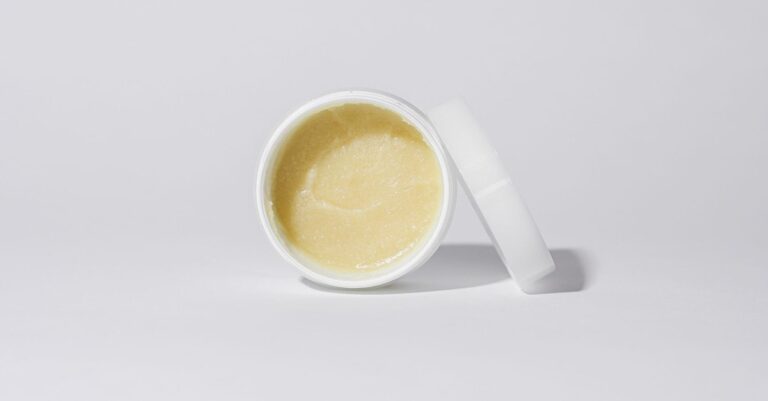
A lip balm is a wax and oil system. A lip oil is an oil system. Neither has a water phase, and microbial growth needs available water. That normally removes both the ISO 11930 challenge test and ISO 17516 microbiological limits from the testing set.
It is a genuine saving, and it is one of the reasons lip care is an attractive first product for a new brand. But the exemption has to be earned in writing. ISO 29621 sets out how a low microbiological risk is demonstrated, and the reasoning belongs in the Product Information File. Our article on why anhydrous cosmetics need fewer tests explains the logic, and what a challenge test exemption is covers ISO 29621 itself.
Two situations break it. A liquid lipstick or gloss containing water is not anhydrous and needs the full preservation set. And a balm in an open pot used with fingers introduces water and skin flora in use, which the assessor should address rather than wave through.
What actually goes wrong
| Failure point | Why it happens | What fixes it |
|---|---|---|
| Pigment not permitted for lip use | Colorant checked against Annex IV generally, not the lip condition | Shade by shade check of the full May Contain list |
| Missing pigment purity data | Supplier supplies a Colour Index number and nothing else | Certificate of analysis with heavy metal results per batch source |
| Rancidity before the stated shelf life | Unsaturated plant oils with no antioxidant rationale | Antioxidant system plus accelerated stability data |
| Undeclared fragrance allergens | Essential oils and flavour oils counted as one ingredient | Full breakdown at your dosage under Regulation (EU) 2023/1545 |
| SPF claim with no test report | Assumed the UV filter concentration speaks for itself | Substantiated SPF testing and Annex VI compliance |
| Menthol or camphor tingle at treatment levels | Sensory effect pushed up without checking Annex III | Concentration check and, where relevant, a warning |
| Medicinal drift in the claim | “Heals cracked lips”, “treats cold sores” | Reword to appearance and condition, or accept a different legal regime |
Flavours, sweeteners and the medicinal line
Flavour is where lip care gets closest to food law in spirit while remaining firmly in cosmetics law in fact. A flavoured balm needs its flavour composition documented like any other raw material, and any sweetener is assessed on the ingestion route rather than dismissed as a trace.
The claim side is more dangerous. A lip balm may moisturise, protect, soothe the appearance of dryness and improve the condition of the lips. A lip balm that claims to heal cracked or wounded lips, to treat cold sores, or to act on a condition is making a medicinal claim by presentation, which takes it out of Regulation (EC) No 1223/2009 entirely. Our guide to classifying borderline products sets out the test, and permitted cosmetic claims covers substantiation.
An SPF lip balm is a sun protection product with all that entails. The UV filters must be listed in Annex VI at permitted concentrations, nano forms need their own approval and the (nano) suffix on the label, and the SPF value has to be substantiated by testing on the finished product. Our guide to SPF testing methods and EU requirements covers what is accepted.
What to have ready
- Exact quantitative formula, percentages rather than ranges, with the full composition of every compound raw material.
- Colorant list with Colour Index numbers and purity data, if the product is tinted.
- Heavy metal analysis for every pigment used.
- Flavour composition, if flavoured, and the fragrance allergen breakdown at your dosage.
- Antioxidant system and rationale behind the stated shelf life.
- Packaging and applicator specification: stick, pot, squeeze tube or doe-foot wand.
- SPF test report, if an SPF claim is made.
- Stability and packaging compatibility data, which for a wax stick also covers heat resistance and sweating.
- Draft artwork with the INCI list, any warnings and the claims you intend to make.
Our full checklist of documents needed to order a CPSR covers each item and why it is needed.
Bringing it all together
Lip care looks like the easiest category to launch and is one of the easiest to get quietly wrong. The chemistry is forgiving, the testing burden is genuinely light, and the barrier to entry is low. What is not forgiving is the ingestion route, which tightens every limit, and the lip column in Annex IV, which quietly disqualifies pigments that are perfectly legal elsewhere in your range.
Get the pigments checked properly, document the anhydrous rationale rather than assuming it, and keep the claim on the cosmetic side of the line. Do that and lip care is one of the cheapest categories in the catalogue to bring to market compliantly.
Lexora prepares safety assessments for lip care specifically. The lip balm safety assessment covers wax and oil balms and sticks, the lip oil safety assessment covers tinted and glossy oil treatments with the full pigment matrix, and the lipstick, lip gloss and lip liner assessment covers a whole colour range on one base formula.
Frequently asked questions
Does a plain unflavoured lip balm really need a CPSR?
Yes. A lip balm is a cosmetic product under Regulation (EC) No 1223/2009, so Article 10 requires a signed safety assessment before it is placed on the market, alongside a Product Information File, a CPNP notification and an EU Responsible Person. Being simple, natural or handmade makes no legal difference.
Why is a lip product assessed against ingestion when nobody eats it?
Because in practice everyone ingests a small proportion of it. Established EU exposure models assume part of any lip product is swallowed during normal use, and the assessment runs an oral calculation alongside the dermal one. That assumption is exactly why lip colorant rules and heavy metal limits are stricter than for skin products.
Do I need a challenge test for a lip balm?
Normally no. A wax and oil balm has no available water, so microbial growth is not supported and both ISO 11930 challenge testing and ISO 17516 microbiological limits usually fall away. The exemption must be justified in the Product Information File under ISO 29621. A water-containing gloss or liquid lipstick is a different case and needs the full set.
Can I use the same pigments as my eyeshadow range in a tinted balm?
Not automatically. Annex IV attaches conditions to each colorant, and permission for use near the eyes is a separate condition from permission for lip application. Some pigments are permitted for one and not the other. Every pigment in a lip formula, including everything under May Contain (+/-), has to clear the lip condition individually.
What shelf life can I claim for a lip oil?
Whatever your stability data supports. For an oil-based product the limiting factor is usually oxidation rather than microbial spoilage, so the antioxidant system and accelerated stability results are what justify the figure. If the total shelf life exceeds 30 months you declare a period after opening; below that you declare a date of minimum durability.
Can I say my balm heals chapped lips?
“Heals” is risky. A cosmetic may moisturise, protect and improve the appearance and condition of the lips. Claiming to heal, repair damaged tissue or treat a condition such as cold sores is a medicinal claim by presentation, which moves the product out of cosmetics law entirely. Reword towards appearance and comfort, or accept the different regime.
Does an SPF lip balm need extra work?
Yes, considerably. The UV filters must appear in Annex VI at permitted concentrations, nano forms require their own approval and the (nano) suffix on the label, and the SPF value has to be substantiated by testing on the finished product rather than calculated from the filter concentration. Tell your assessor at intake so it is scoped from the start.