


If you make a face oil, a balm, a dry shampoo or a wax, you have probably been quoted for microbiological testing and a preservative efficacy challenge test. For a genuinely water-free formulation, neither is normally required — and anhydrous cosmetics testing is one of the few places in EU compliance where the correct answer is also the cheaper one.
That does not mean anhydrous products escape testing altogether. It means the risks are different, so the tests are different. Here is what actually applies, and where the exemption stops.
Key takeaways
- Microorganisms need available water to grow. No water phase means no microbial growth risk to test for.
- ISO 29621 sets out the criteria for products considered low microbiological risk, including low water activity, high alcohol content and extreme pH.
- Anhydrous products still need a PIF, a CPSR and stability and compatibility testing.
- Anhydrous does not mean stable — oxidation, rancidity, caking and packaging interaction are the real failure modes.
- Water-in-oil emulsions and hygroscopic powders are borderline and need a formulation-specific judgement.
- The exemption is a conclusion your Safety Assessor must document, not something you simply assert.
What makes a product anhydrous
In practical terms, an anhydrous cosmetic contains no water phase: nothing in the formulation is there as water, and no water is added during manufacture. Typical examples include:
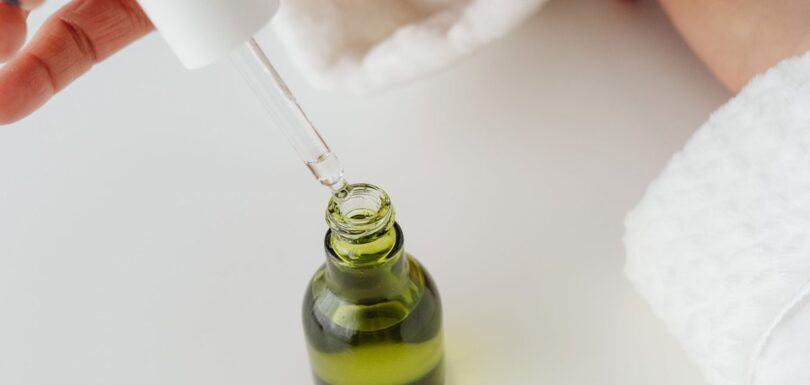
- Facial and body oils, and oil-based serums
- Anhydrous balms, salves and ointments
- Waxes and pomades
- Dry shampoos, loose and pressed powders, mineral make-up
- Alcohol-based hair sprays and fragrances
- Oil-based cleansing balms that emulsify only on contact with water
What matters is not the marketing description but the water activity of the finished product — the amount of unbound water available to microorganisms. Below roughly 0.6, most bacteria, yeasts and moulds cannot multiply.
The standard behind the exemption
ISO 29621 is the reference point. It provides guidance for identifying cosmetic products considered to present a low microbiological risk, based on factors including low water activity, high or low pH, high alcohol content, and ingredients that are inherently hostile to microbial survival.
Where a product meets those criteria, routine microbiological testing under ISO 17516 and preservative efficacy testing under ISO 11930 are not needed to demonstrate safety. Our earlier explainer on challenge test exemptions covers the criteria in more detail.
What can still go wrong — and what tests it
Removing water removes one failure mode and leaves several others untouched. This is where anhydrous products actually fail in the market.
| Product type | Real failure mode | What testing addresses it |
|---|---|---|
| Facial and body oils | Oxidation, rancidity, peroxide value rising over shelf life | Accelerated stability, organoleptic and chemical monitoring |
| Balms and salves | Graining, separation of the wax and oil phases, texture change | Accelerated stability plus freeze–thaw cycling |
| Waxes and pomades | Surface bloom, hardening, loss of pliability | Accelerated stability at elevated temperature |
| Dry shampoos and powders | Caking, moisture uptake, colour drift, propellant issues | Stability plus packaging compatibility |
| Alcohol-based sprays | Evaporation loss, fragrance degradation, valve or closure failure | Compatibility testing with the actual pack |
| Any anhydrous product | Migration of fragrance or actives into the packaging material | Container compatibility over the intended shelf life |
This is why stability and compatibility testing stays in scope for every product regardless of water content. It is what substantiates your shelf life and your period after opening, and without it neither figure on your pack has a basis.
Where the exemption stops
Three situations regularly catch brands out.
Water-in-oil emulsions
A W/O emulsion has water — it is simply the internal phase. Water activity can still be high enough to support growth in the aqueous droplets, so these usually need the full test set. “Oil-based” in marketing terms does not mean anhydrous in regulatory terms.
Hygroscopic powders and consumer use patterns
A powder that draws moisture from the air, or a balm used in a humid bathroom with wet fingers, can end up with localised water activity above the threshold in real use. Reasonably foreseeable use is part of the safety assessment, not just the formulation as manufactured.
Products near the alcohol threshold
High alcohol content can make a formulation self-preserving, but “high” is a specific figure, not an impression. A formulation sitting just below it does not qualify.
What you should be paying for
For a genuinely anhydrous product, the correct scope is three things: a Product Information File, a CPSR documenting the low-risk justification, and accelerated stability and compatibility testing.
The Anhydrous & Alcohol-Based Cosmetic Safety Package bundles exactly those three at a discount, and deliberately excludes the two tests you do not need. If it turns out your formulation does contain a water phase, the Water-Based Cosmetic Safety Package covers the full set instead — and our guide to which cosmetic tests you actually need has a product-group table to help you place yourself.
Bringing it all together
Anhydrous cosmetics are one of the clearest cases in EU compliance where the requirements genuinely are lighter — but only for the two microbiological tests, and only where the low-risk justification holds and is documented. Stability, compatibility, the PIF and the CPSR all remain.
The trap is not paying for tests you need. It is assuming “oil-based” means water-free, or that skipping microbiology means skipping testing. Establish your water activity, let your assessor document the reasoning, and test for the failure modes anhydrous products actually have: oxidation, texture and the packaging.
Frequently asked questions
Do anhydrous cosmetics need a preservative?
Generally no. Preservatives control microbial growth in water, so a formulation with no water phase usually does not need one. Many anhydrous products do include an antioxidant such as tocopherol, but that protects the oils from oxidation — it is not a preservative and does not serve the same purpose.
Do I still need a CPSR for an anhydrous product?
Yes, without exception. A Cosmetic Product Safety Report is mandatory for every cosmetic placed on the EU market under Article 10 of Regulation (EC) No 1223/2009. For an anhydrous product it is also where the low microbiological risk justification is formally recorded.
Is an oil cleanser anhydrous if it emulsifies with water?
If the product as supplied contains no water and only emulsifies on contact with water during use, it is anhydrous as manufactured. The assessment considers the product in its container, though foreseeable use patterns — wet hands, humid bathrooms — form part of the reasoning.
What is water activity and how is it measured?
Water activity is the proportion of unbound water available to microorganisms, on a scale from 0 to 1. It is measured with a water activity meter on the finished product. Below roughly 0.6, most bacteria, yeasts and moulds cannot multiply, which is the basis for the low-risk classification in ISO 29621.
Does my anhydrous product still need a period after opening?
If the minimum durability is more than 30 months you need a period after opening, unless the product’s nature makes deterioration after opening implausible. Either way you need stability testing to substantiate whichever figure you put on the pack.
Can I order microbiological testing anyway?
Yes, and some brands do because a retailer, a private-label client or their own quality system requires it. From a purely regulatory standpoint it is not required for a genuinely anhydrous product, and we will tell you that rather than let it inflate the order.