


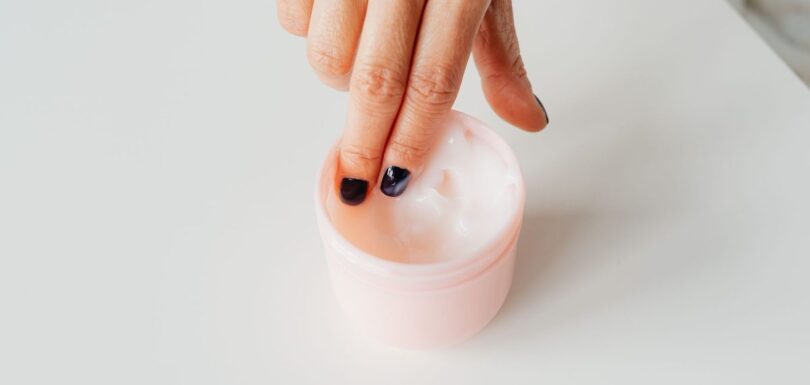
Before a moisturiser or anti-ageing treatment can be sold anywhere in the EU, it needs a Cosmetic Product Safety Report, and obtaining a CPSR for face cream products is a more exacting exercise than most founders expect. Because a face cream is a leave-on product applied to facial skin once or twice a day, the safety assessor works with some of the highest exposure values in the SCCS guidance — and a tighter margin of safety than any rinse-off product.
Add the actives that define the anti-ageing category — retinol, exfoliating acids, vitamin C derivatives, peptides — and the assessment becomes a genuinely technical review. This guide covers what the assessor evaluates, which actives attract special scrutiny, which lab tests feed into the report, where the claims boundary sits, and what to prepare. New to the report itself? Start with our overview of what a CPSR is and what it contains.
Key takeaways
- Face creams are leave-on, high-frequency products, so the assessor uses higher exposure values and demands a margin of safety of at least 100.
- Retinol and its esters are now formally restricted in the EU following an SCCS review — face creams sit at a higher permitted tier than body lotions.
- Exfoliating acids are judged on free acid concentration and pH together; salicylic acid has its own Annex III restrictions.
- Peptides are usually low-risk but data-poor, so expect requests for supplier safety dossiers.
- Fragrance allergens must be declared at a ten-times stricter threshold in leave-on products than in rinse-off ones.
- Microbiological counts, a challenge test and stability data are CPSR inputs — the lab work takes weeks, so start early.
Why face creams get a tighter margin of safety
Under Regulation (EC) No 1223/2009, every safety assessment rests on exposure: how much product is applied, how often, to which body area, and how much of each ingredient could cross the skin. A face cream scores high on every axis — it stays on for hours, is applied morning and evening, and sits on facial skin, which is thinner in places, close to the eyes and mouth, and more prone to sensitisation.
The assessor feeds these leave-on exposure defaults into the margin-of-safety calculation for each ingredient, and the result must generally reach at least 100. An active level that passes comfortably in a rinse-off cleanser can fail in a face cream: the product category itself changes the maths.
Note: if your day cream carries an SPF value, additional expectations apply to UV filters and efficacy substantiation — see our guide to the CPSR for sunscreens and SPF day creams.
What the assessor reviews in a moisturiser formula
The starting point is the full quantitative formula — every ingredient by INCI name at its exact percentage. Each substance is cross-checked against the annexes of the Cosmetics Regulation: prohibitions, restrictions and the positive lists for colourants, preservatives and UV filters. Three technical layers sit on top:
- Impurity profiles. Technically unavoidable traces — heavy metals, 1,4-dioxane in ethoxylated emulsifiers, residual monomers — are evaluated against supplier certificates of analysis.
- Dermal absorption. Where no measured data exist, conservative SCCS defaults apply, which can materially tighten the margin of safety for potent actives.
- Aggregate exposure. The same consumer may also use a serum, eye cream and cleanser with overlapping ingredients — and for vitamin A, diet already contributes.
Actives that attract special scrutiny
Retinol and vitamin A esters
Retinol, retinyl acetate and retinyl palmitate are the defining case. Following a Scientific Committee on Consumer Safety review of total vitamin A exposure, they are now formally restricted under the Cosmetics Regulation, with maximum concentrations expressed as retinol equivalents. Face and hand products are permitted a higher maximum than body lotion, but the limit is binding either way and already applies to newly placed products. Your assessor will convert your ester into retinol equivalents, verify it against the limit, and check the mandatory vitamin A warning on the label.
AHAs, BHAs and pH
Glycolic, lactic and other alpha-hydroxy acids are assessed on two variables together: total free acid concentration and the pH of the finished formula. A low pH with a meaningful acid load raises irritation potential, so expect scrutiny of your pH specification, plus possible requests for usage instructions and sun-protection advice. Salicylic acid, the usual BHA, is separately restricted under Annex III with its own limits, labelling conditions and restrictions for young children.
Vitamin C and its derivatives
Ascorbic acid and derivatives such as sodium ascorbyl phosphate are well tolerated and not subject to specific EU limits, so the questions shift to chemistry: is the form stable in your emulsion, what does it degrade into, and does the low pH it requires interact with other acids in the formula? Stability data are the key evidence here.
Peptides
Signal and carrier peptides are used at very low concentrations and are rarely a real toxicological concern — but they are data-poor, proprietary specialities with little published toxicology. The assessor will therefore ask for the supplier’s safety dossier: composition of the trade blend, impurity data, and any irritation or sensitisation studies. Request these early — waiting for them is a common cause of CPSR delay.
| Active | What the safety assessor checks | Typical data needed |
|---|---|---|
| Retinol / retinyl esters | Retinol-equivalent concentration against the face-product limit; label warning; aggregate vitamin A exposure | Exact input concentration, supplier specification, label artwork |
| AHAs (glycolic, lactic) | Total free acid level and formula pH; irritation potential; usage instructions | pH specification, acid concentrations, any tolerance data |
| Salicylic acid (BHA) | Compliance with its Annex III entry: limits, warnings, child restrictions | Input concentration, label wording |
| Vitamin C and derivatives | Form used, formula pH, degradation over shelf life | Stability test results, supplier documentation |
| Peptides | Identity and composition of the trade blend; impurities; sensitisation data | Supplier safety dossier, certificate of analysis |
| Fragrance / essential oils | Allergen content at leave-on thresholds; IFRA category compliance | IFRA certificate, allergen declaration, fragrance SDS |
Fragrance allergens: stricter rules for leave-on products
Because a face cream stays on the skin, fragrance allergens must be individually declared on the ingredient list at a threshold ten times stricter than for rinse-off products — 0.001 % versus 0.01 %. That applies whether the scent comes from a fragrance compound or from essential oils, which routinely contain allergens such as linalool and limonene. The EU has also expanded the allergen list from 26 entries to more than 80, with deadlines now imminent — our guide to the new fragrance allergen labelling rules explains the timeline. For the CPSR, the assessor needs the fragrance house’s allergen declaration and IFRA certificate for your application category.
Microbiology, challenge testing and stability
A water-based emulsion is an inviting growth medium, so the CPSR needs microbiological evidence. Three pieces of lab work feed in:
- Microbiological quality counts on the finished product, assessed against the recognised limits for products applied to the face.
- Preservative efficacy testing — the challenge test to ISO 11930, which inoculates the product with bacteria, yeast and mould over 28 days. For a jar that fingers dip into daily this is effectively non-negotiable; the recognised exemptions rarely apply. Lexora can arrange the preservative efficacy challenge test alongside the report.
- Stability and packaging compatibility data, which underpin the shelf-life statement: a period-after-opening (PAO) symbol for durability over 30 months, or a best-before date if shorter. Retinol and vitamin C formulas need particular attention, since their actives degrade first.
Plan backwards: the challenge test alone takes several weeks, so commission lab work as soon as the formula is final.
The claims boundary: anti-ageing yes, medicine no
“Anti-ageing”, “reduces the appearance of fine lines” and “firms the look of skin” are cosmetic claims — permitted, provided you can substantiate them under the EU’s common criteria. But a claim that promises to change the body’s structure or function, or to treat a condition — “removes wrinkles permanently”, “repairs sun damage at the cellular level” — pushes the product towards medicinal classification, judged on your presentation as a whole: pack copy, website, social media. Our article on the cosmetic–medicinal–biocide boundary walks through the tests regulators apply.
Warning: a safety assessor signs off a cosmetic. If your labelling or advertising makes medicinal claims, the CPSR does not protect you — authorities can reclassify the product as an unauthorised medicine and remove it from sale. Fix the claims before the assessment, not after enforcement.
What to send the safety assessor
A face-cream dossier comes together quickly if you collect everything before ordering: the full quantitative formula with INCI names and percentages; safety data sheets and certificates of analysis for each raw material; supplier dossiers for speciality actives; the fragrance IFRA certificate and allergen declaration; microbiological, challenge-test and stability results; packaging details; label artwork; and instructions for use. Our checklist of documents needed to order a CPSR covers each item.
Bringing it all together
A CPSR for a moisturising or anti-ageing face cream is, at heart, an exposure problem: leave-on use on facial skin narrows the margin of safety, so retinol, acid systems, data-poor peptides and fragrance allergens are all examined more closely than in a rinse-off product. The formula review is only half the picture — microbiological quality, a passed challenge test and stability data let the assessor sign with confidence, and honest claims keep the product on the right side of the medicinal boundary.
If you are bringing a face cream to the EU market, the most efficient route is Lexora’s Essential Safety Set, which bundles the safety report with the core compliance steps a new product needs — or the standalone CPSR service if the rest is covered. For the full process, see how to get a CPSR for your cosmetic product.
Frequently asked questions
Do I need a CPSR for a face cream sold in the EU?
Yes — every cosmetic product placed on the EU market must have a Cosmetic Product Safety Report before sale, under Regulation (EC) No 1223/2009. This applies equally to indie brands, multinationals and imported products.
Can I still use retinol in an EU face cream?
Yes, within the new legal maximums. Retinol and its esters are now restricted with limits expressed as retinol equivalents; face creams get a higher maximum than body lotions, and a vitamin A warning is required on the label.
Is a challenge test always required for a face cream CPSR?
In practice, yes. A face cream is almost always a water-based emulsion that supports microbial growth, so the assessor needs preservative efficacy data to ISO 11930; the recognised exemptions rarely apply.
Is “anti-ageing” a legal claim in the EU?
Yes, “anti-ageing” is an acceptable cosmetic claim if you hold evidence to substantiate it. Claims promising permanent or structural change, or treatment of a disease, push the product towards medicinal classification.
Do peptides need their own safety data for the CPSR?
Usually the assessor relies on the supplier’s safety dossier, because most cosmetic peptides are proprietary and data-poor. Ask your supplier for the blend’s composition, a certificate of analysis and any sensitisation studies early.
How long does a CPSR for a face cream take?
The assessment itself typically takes days once the dossier is complete; lab work is the real timeline driver. A challenge test runs for around a month, so commission testing early.