


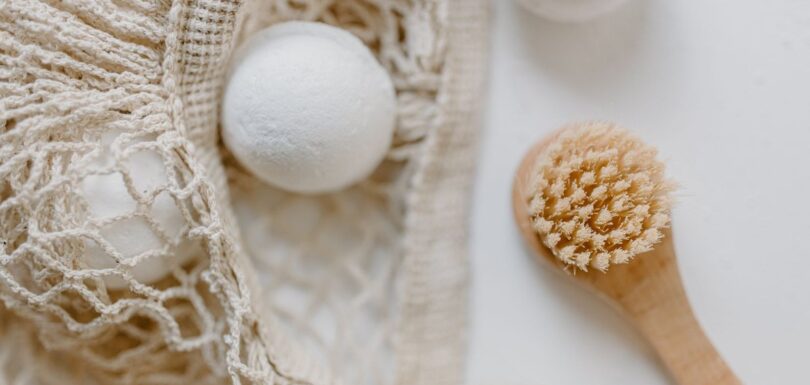
Are bath bombs cosmetics or toys? For a plain fizzer sold to adults the answer is straightforward: it is a cosmetic. For a glittery unicorn fizzer with a small plastic figure hidden inside, sold in a children’s gift set, the answer is that it may be both, and being both means two separate legal regimes with two separate sets of obligations.
This is one of the most common borderline questions in the EU market, and it is getting more common as children’s bath and play products blur together. This guide sets out how the classification actually works, what changes when a bath product is aimed at children, and what to do when a product falls into the overlap.
Key takeaways
- A bath bomb intended to cleanse, perfume or change the appearance of the skin is a cosmetic under Regulation (EC) No 1223/2009.
- A product designed for play value may also be a toy under the Toy Safety Directive 2009/48/EC.
- Falling into both means complying with both, not choosing the easier one.
- An embedded plastic figure, a squirty animal or a hidden surprise pushes a fizzer towards toy status.
- Products for children need an enhanced safety assessment on children’s body weight and real use patterns.
- Accidental ingestion is a foreseeable use for bath products aimed at children, and the assessment has to model it.
- Glitter engages the synthetic polymer microparticle restriction in Regulation (EU) 2023/2055.
- Bath bombs are largely anhydrous, so challenge and microbiological testing usually fall away.
The cosmetic test
Article 2 of Regulation (EC) No 1223/2009 defines a cosmetic product as a substance or mixture intended to be placed in contact with the external parts of the human body, or with the teeth and mucous membranes of the oral cavity, with a view exclusively or mainly to cleaning them, perfuming them, changing their appearance, protecting them, keeping them in good condition or correcting body odours.
A bath bomb ticks that box comfortably. It goes into bathwater in contact with the skin, and it perfumes, softens or colours. So does bubble bath, bath salt, bath oil and a shower fizzer. All of them need a CPSR, a Product Information File, a CPNP notification and an EU Responsible Person. Our guide to what qualifies as a cosmetic product covers the definition in detail.
Nothing about being handmade, small batch or sold at a craft market changes this. Our article on selling cosmetics from home in the EU covers that misconception directly.
The toy test
Directive 2009/48/EC defines a toy as a product designed or intended, whether or not exclusively, for use in play by children under 14 years of age. The phrase “whether or not exclusively” is the one that matters: a product does not stop being a toy because it also has another function.
The directive’s own scope notes exclude some cosmetic-type products, but the exclusion is not a blanket one, and the Commission’s guidance on the borderline has consistently treated the presence of genuine play value as the deciding factor.
| Product | Likely classification | Why |
|---|---|---|
| Plain lavender bath bomb, adult packaging | Cosmetic only | No play function, adult target |
| Coloured fizzer, children’s branding, no insert | Cosmetic, assessed for children | Still a bath product; child user changes the assessment |
| Fizzer with a plastic figure inside | Cosmetic and toy | The insert is a toy in its own right |
| Bath crayons or bath paint | Cosmetic and toy in most readings | Designed for drawing and play |
| Squirty bath animal, no cosmetic function | Toy only | Not intended to cleanse or perfume the skin |
| Play make-up set for children | Cosmetic and possibly toy | Cosmetic function plus play packaging and accessories |
| Slime or putty marketed for play | Toy, and possibly a chemical mixture | No cosmetic function; CLP and Toy Safety may both apply |
Falling into both regimes means doing both. A bath bomb with an embedded figure needs the full cosmetic file (CPSR, PIF, CPNP notification, Responsible Person, Article 19 labelling) and toy compliance for the insert: an EN 71 assessment covering mechanical and physical properties, flammability and migration of certain elements, a technical file, an EU Declaration of Conformity and CE marking. There is no version of this where one regime absorbs the other.
Small parts and the choking question
The insert is where most enforcement action actually lands, and it has little to do with the chemistry. EN 71-1 covers mechanical and physical properties, including the small parts cylinder test used to assess choking hazards for children under 36 months.
A small plastic figure released from a dissolving bath bomb is, by design, a small part in a wet environment with an unsupervised child. If your product is aimed at or accessible to under-threes, that is the first thing an inspector will look at. If it is aimed at older children, you will normally need the age warning and the packaging to support that positioning honestly.
The General Product Safety Regulation adds a further layer for anything not fully covered elsewhere, and it now brings documentation and traceability duties for online sales. Our guide to GPSR technical documentation covers what EU sellers must be able to produce.
What changes when the user is a child
Even where a bath product is unambiguously a cosmetic and nothing else, aiming it at children changes the safety assessment materially.
Body weight. The margin of safety divides exposure by body weight. A child weighs a fraction of an adult, so the same applied amount produces a much higher internal dose. Adult defaults are simply the wrong numbers.
Real use patterns. Children use more product, more often, and less carefully. A bath bomb intended as one per bath will sometimes be two, and the assessment should reflect the behaviour rather than the instructions.
Ingestion. Bathwater goes in mouths. For bath products aimed at children this is a foreseeable exposure route, not an edge case, and the assessment has to model it.
Age-restricted substances. Annex III and Annex V contain entries that specifically exclude children under three. Salicylic acid is the one most often missed, and certain preservatives carry the same restriction.
Sensitisation. Fragrance and preservative choices are assessed more conservatively, because sensitisation acquired in early childhood has lifelong consequences. Our guide to safety assessment for baby cosmetics covers the under-three band specifically.
Glitter is now a regulatory question rather than a formulation choice. Regulation (EU) 2023/2055 restricts synthetic polymer microparticles under REACH, with staged transitional periods progressively removing loose plastic glitter from cosmetic use. Children’s bath products are one of the categories most affected. Mineral, mica-based and certified biodegradable alternatives are the route forward.
The testing side is genuinely light
The good news for bath fizzers is that the chemistry is forgiving. A bath bomb is bicarbonate, citric acid, a binder, colour and fragrance, with little or no available water. Microbial growth needs available water, so ISO 11930 challenge testing and ISO 17516 microbiological limits normally fall away, exactly as they do for other anhydrous cosmetics. The rationale goes in the Product Information File under ISO 29621 rather than being assumed.
What replaces them is stability in a humid bathroom, packaging that keeps moisture out, colorants checked against Annex IV, and fragrance allergens declared under Regulation (EU) 2023/1545. Our guide to which cosmetic tests you actually need maps the set.
Bringing it all together
The classification question is decided by intended function and by design, not by what you call the product. If it cleanses, perfumes or changes the appearance of skin, it is a cosmetic and the full cosmetic file applies. If it is also designed for play by a child under 14, the Toy Safety Directive applies on top, with its own technical file, conformity assessment and CE marking.
The commercially useful conclusion is usually this: keep the play value out of the cosmetic. A plain fizzer sold alongside a separately compliant toy is two simple files. A fizzer with a figure baked into it is one product carrying two regimes, and the toy side is the harder of the two.
Lexora prepares the cosmetic side of this for bath and children’s products. For a product aimed at children, the children’s cosmetics safety assessment rebuilds the exposure model on children’s body weight and real use patterns, and the baby cosmetics assessment covers the under-three band. For a simple adult fizzer or bath salt, the Low-Risk Compliance Kit bundles the assessment with the notification and Responsible Person service. If your product sits in the overlap, tell us at intake and we will tell you plainly which regimes apply.
Frequently asked questions
Do bath bombs need a CPSR?
Yes. A bath bomb is a cosmetic product under Regulation (EC) No 1223/2009 because it is intended to contact the skin and to perfume, soften or colour. It needs a signed Cosmetic Product Safety Report, a Product Information File, a CPNP notification and an EU Responsible Person before it is sold, whether it is made in a factory or a home kitchen.
When does a bath product become a toy?
When it is designed or intended, whether or not exclusively, for use in play by children under 14. In practice the deciding factors are an embedded toy insert, a play function such as drawing or moulding, and packaging and marketing built around play rather than washing. A fizzer with a plastic figure inside is the clearest case.
If it is both, can I just comply with the stricter one?
No. The two regimes cover different things and neither absorbs the other. You need the full cosmetic file plus toy compliance for the play element: an EN 71 assessment, a technical file, an EU Declaration of Conformity and CE marking. They run in parallel.
Does a children’s bath bomb need a different safety assessment?
Yes. The margin of safety divides exposure by body weight, so a child’s assessment cannot use adult defaults. It also has to model real use patterns, accidental ingestion of bathwater, and the Annex III and Annex V entries that specifically exclude children under three, of which salicylic acid is the most frequently missed.
Can I still put glitter in a children’s bath bomb?
Only if it is not a restricted synthetic polymer microparticle. Regulation (EU) 2023/2055 restricts loose plastic glitter under REACH with staged transitional periods, and children’s bath products are one of the categories most affected. Mineral, mica-based and certified biodegradable effect pigments are the route forward.
Do bath bombs need a challenge test?
Normally not. A dry fizzer has little or no available water, so microbial growth is not supported and ISO 11930 challenge testing and ISO 17516 microbiological limits usually fall away, with the rationale documented under ISO 29621. A bath melt containing water, or a liquid bubble bath, is a different case and needs the full set.
What about bath crayons and bath paints?
These are the hardest cases. They have a cosmetic function in that they colour and wash off skin, and a clear play function in that they are designed for drawing. In most readings both regimes apply. Get the classification confirmed before you commission artwork, because the labelling requirements differ between the two.