



A nail polish safety assessment is unlike any other cosmetic assessment, and brands consistently underestimate it. Nail polish is the only mainstream cosmetic where the user breathes a meaningful part of the dose, where a whole category of ingredients is legally restricted to professional use, and where a hundred-colour range can be one report or a hundred depending entirely on how it is scoped.
Nail and cuticle care sits next to it with a different problem: the nail plate is dead tissue, but the skin around it is not, and that is the exposure the assessment has to cover. This guide sets out what a qualified assessor actually examines in nail products, which restrictions bite hardest, and how to avoid paying per shade for a range built on one lacquer.
Key takeaways
- Nail polish is a cosmetic under Regulation (EC) No 1223/2009 and needs a full CPSR, PIF, CPNP notification and Responsible Person like any other.
- The assessment includes inhalation exposure from the solvent system, which no skin cosmetic requires.
- Toluene is restricted for nail products under Annex III and carries a mandatory label warning.
- HEMA and Di-HEMA trimethylhexyl dicarbamate are restricted to professional use under Regulation (EU) 2020/1682. Selling them to consumers is a breach.
- A shade range on one base formula is one assessment, priced by shades and ingredient count, not per colour.
- Nail polish is anhydrous, so challenge and microbiological testing normally fall away, with the rationale documented.
- For cuticle products the exposure that matters is to the living skin of the nail fold, which is often broken.
- Glitter and effect finishes engage the synthetic polymer microparticle restriction in Regulation (EU) 2023/2055.
Why nail polish is assessed differently
Every other cosmetic in your range is assessed primarily on what crosses the skin. Nail polish is assessed on that plus what the user inhales while it dries, because the formula is largely volatile solvent and the product is applied in a small breathing zone with the head bent over the hands.
The nail plate itself is keratin, dead and relatively impermeable, so dermal absorption through the nail is low. But polish reaches the nail fold, the cuticle, the hyponychium and the surrounding skin every time it is applied, and a proportion of every manicure ends up on skin that is fully alive. The assessment has to model the real application, not the idealised one.
On top of that, nail products have a professional and consumer split that almost nothing else in cosmetics has. The same substance can be perfectly legal in a salon product and prohibited in the identical product sold to a consumer. Getting that wrong is not a labelling slip; it is placing a non-compliant product on the market. Our guide to what happens if you sell non-compliant cosmetics covers the enforcement side.
The restricted substances that decide the outcome
Toluene
Toluene remains permitted in nail products within its Annex III entry, but at a restricted concentration and with a mandatory warning on the label. It is one of the substances the “3-free” and “10-free” marketing claims were built around, and if you use it you have to declare it correctly rather than quietly.
Methacrylate monomers
This is the one that catches brands out. Regulation (EU) 2020/1682 restricted HEMA (2-hydroxyethyl methacrylate) and Di-HEMA trimethylhexyl dicarbamate to professional use only, following a wave of allergic contact dermatitis linked to consumer gel systems applied at home. They appear in gel polishes, builder gels, base coats and some nail hardeners.
If your product contains either, it cannot be sold as a consumer product in the EU. The restriction changes your label, your distribution and who you may legally sell to. It is not something a reformulation at the concentration level fixes.
Formaldehyde and formaldehyde releasers
Free formaldehyde is prohibited in cosmetics under Annex II. Nail hardeners historically relied on it, and some still rely on releasers or on tosylamide/formaldehyde resin as a film former, which is a different substance from formaldehyde itself but frequently confused with it. Any product releasing formaldehyde above the threshold requires the “contains formaldehyde” warning, and hardener claims need to be checked against what the active is actually permitted to do.
Colorants and effect pigments
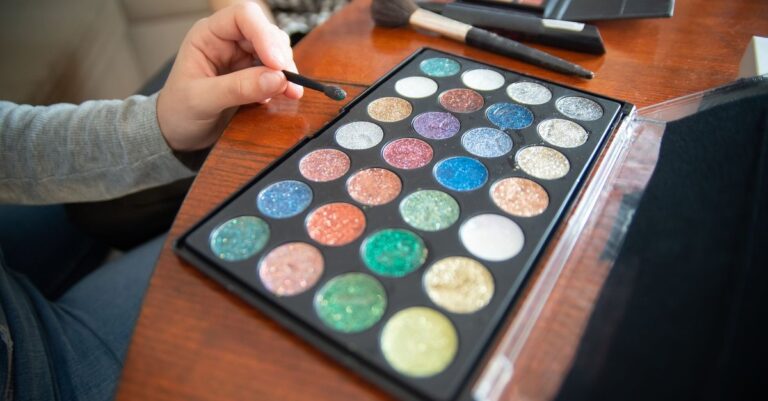
Only colorants listed in Annex IV may be used, with their purity criteria, and a hundred-shade range means checking every pigment in the May Contain (+/-) list, not just the ones in the bestsellers. Glitters and interference pigments then raise a second question under Regulation (EU) 2023/2055, the synthetic polymer microparticle restriction, which is progressively removing loose plastic glitter from cosmetic use.
The “10-free” trap. Free-from claims are marketing, not compliance. Regulation (EU) No 655/2013 and its common criteria prohibit claims that denigrate legally used ingredients or imply a specific safety benefit the product does not have. A “10-free” claim that suggests competitors are unsafe, or that implies a legally permitted substance is dangerous, is challengeable. Our guide to permitted cosmetic claims covers where the line falls.
What the file needs to contain
| Item | When required | Why the assessor needs it |
|---|---|---|
| Base formula with the full May Contain pigment list | Always | The whole shade matrix is assessed, not one colour |
| Number of shades sharing the base | Always | Determines the scope and the price of the assessment |
| Colour Index numbers and pigment purity data | Always | Annex IV compliance and heavy metal traces |
| Solvent system composition | Always | Drives the inhalation exposure calculation |
| Hardener or treatment active documentation | If a strengthening claim is made | Several hardener actives are restricted |
| Applicator specification | Always | Brush and pen formats return to the pack after skin contact |
| Professional or consumer intended use | Always | Decides whether restricted monomers are permitted at all |
| Essential oil composition | Cuticle oils | Allergen declaration under Regulation (EU) 2023/1545 |
Cuticle oils, hardeners and treatments
Nail and cuticle care products are usually anhydrous oils or solvent systems applied daily with a brush or pen. Three things separate them from polish.
First, the target is skin. Cuticle oil is applied to the nail fold, which is living tissue and frequently broken or inflamed in exactly the customers who buy the product. The assessment cannot assume an intact barrier.
Second, cuticle oils are usually built on plant oils and essential oils, which means the fragrance allergen declaration under Regulation (EU) 2023/1545 applies, and natural blends routinely exceed the leave-on threshold without the brand realising. Our article on essential oils in cosmetics covers how restricted constituents arrive through the oil rather than the ingredient list.
Third, hardener and strengthener claims sit close to the borderline. A cosmetic may improve the appearance and condition of the nail. A product claiming to treat onychomycosis, cure a nail disease or restore a damaged nail matrix is making a medicinal claim. Our guide to classifying borderline products sets out the test.
Applicator hygiene is a real assessment point for nail products, not a formality. A doe-foot wand, a brush or a pen tip returns to the pack after touching skin, sometimes broken skin. In an anhydrous formula that is usually manageable, but the file should address it rather than ignore it, and the packaging specification is part of what the assessor needs.
Testing: what you do and do not need
Nail polish is a solvent-based anhydrous system and nail oils are anhydrous oil systems. Neither supports microbial growth, so preservative efficacy testing and microbiological limits normally fall away, exactly as they do for other anhydrous cosmetics. The rationale goes in the Product Information File under ISO 29621.
What you do need instead:
- Stability and packaging compatibility, because solvent systems attack packaging, pigments settle, and film formers change viscosity over shelf life. An accelerated stability and compatibility test covers both.
- Heavy metal analysis on pigments, assessed as technically unavoidable impurities.
- Oxidative stability data for oil-based cuticle products.
- A certificate of analysis on the finished product, feeding the Part A physicochemical dataset.
Our guide to which cosmetic tests you actually need maps the full set by product group.
Do not pay per shade
A hundred-colour nail polish range is one lacquer base with a hundred pigment loadings. Assessed properly, that is one CPSR covering the base formula and the full pigment matrix. Assessed lazily, it is a hundred invoices.
The honest pricing model follows two numbers: how many shades share the base, and how large the combined ingredient list is once every pigment in the May Contain list is counted. What genuinely has to be done shade by shade is the Annex IV check, because a single pigment that fails its purity criteria or is not permitted for the application site fails the range.
The same logic applies to a tinted cuticle oil range or a set of treatment variants on one base. Our guide to when a separate CPSR is required for variants covers where the line falls, and how much a CPSR costs covers the pricing logic across product types.
Bringing it all together
Nail products fail compliance in three places, and none of them is the colour. They fail on restricted monomers sold to consumers who should never have been able to buy them. They fail on a pigment deep in the May Contain list that nobody checked. And they fail on a hardener or free-from claim that promises more than a cosmetic is allowed to promise.
Get the professional and consumer split right, get every pigment checked against Annex IV, and keep the claims on the cosmetic side of the line, and the rest of the assessment is straightforward. The anhydrous chemistry that makes nail products awkward to formulate is the same chemistry that spares you two laboratory tests.
Lexora prepares safety assessments for nail products across the whole range. The nail polish safety assessment covers a full shade range on one base formula, priced by shades and ingredients rather than per colour, and the nail and cuticle care safety assessment covers oils, treatments, hardeners and strengtheners. If you are unsure whether a hardener active or monomer is permitted, a cosmetic formula screening answers that before you commit.
Frequently asked questions
Does nail polish need a CPSR?
Yes. Nail polish is a cosmetic product under Regulation (EC) No 1223/2009, so it needs a signed Cosmetic Product Safety Report, a Product Information File, a CPNP notification and an EU Responsible Person before it goes on sale. There is no exemption for small ranges or indie brands.
Can I sell a gel polish containing HEMA to consumers?
No. Regulation (EU) 2020/1682 restricted HEMA and Di-HEMA trimethylhexyl dicarbamate to professional use only, after they were linked to widespread allergic contact dermatitis from home gel systems. A consumer product containing either is non-compliant regardless of the concentration, and the restriction affects your labelling and distribution as well as the formula.
Do I need a separate assessment for every shade?
No, provided the shades share a base formula. A range is assessed as one base plus the full pigment matrix declared under May Contain (+/-), and the price should follow the number of shades and the combined ingredient count. Every pigment still has to clear Annex IV individually, which is the work you are paying for.
Is a challenge test needed for nail polish or cuticle oil?
Normally not. Both are anhydrous, so there is no available water to support microbial growth and the ISO 11930 challenge test and ISO 17516 microbiological limits usually fall away. The exemption has to be justified in the Product Information File under ISO 29621 rather than simply asserted.
Can I claim my polish is “10-free”?
With care. Free-from claims are assessed against the common criteria in Regulation (EU) No 655/2013, which prohibit denigrating legally permitted ingredients or implying a safety benefit you cannot substantiate. Listing what a formula omits is not automatically unlawful, but a claim that suggests competitor products are unsafe is challengeable.
Is a nail hardener still a cosmetic?
It is, as long as the claim stays cosmetic: improving the appearance and condition of the nail. Claiming to treat a nail disease, cure a fungal infection or repair the nail matrix moves the product towards medicinal classification, which is a different legal regime entirely. See our guide to cosmetic versus medicinal versus biocidal products.
What about glitter polishes?
Glitter and effect finishes engage the synthetic polymer microparticle restriction introduced by Regulation (EU) 2023/2055, which is progressively removing loose plastic glitter from cosmetic use under staged transitional periods. New formulations should be planned around biodegradable or mineral alternatives rather than around the end of the transition.